Une amie m’a dit que je devais absolument lire un roman de Guillaume Musso, qu’elle m’a prêté. Cet auteur a beaucoup de succès, mais n’est pas considéré comme un écrivain sérieux. On le range généralement dans un petit groupe qui est tourné en dérision par l’intelligentsia et comprend Marc Levy, Anna Gavalda, Amélie Nothomb et quelques autres.
Cependant, peut-on traiter avec dédain ce que l’on n’a pas lu ? Je me lance donc dans la lecture de Et après...
Je m’aperçois assez rapidement qu’il s’agit d’une histoire à dormir debout : un des personnages a des « pouvoirs ». Ceux-ci suscitent d’abord l’incrédulité du héros mais, après quelques dizaines de pages, le voilà qui y croit ! Mais pas le lecteur.
Cela dit, il faut reconnaître que ce dernier a envie de connaître la suite, malgré les nouvelles invraisemblances qui s’accumulent. En outre, j’ai sauté certains passages particulièrement mièvres.
Finalement, le héros se rend compte que lui aussi a des « pouvoirs ». Cela se termine comme cela.
Reconnaissons que c’est assez bien écrit. De plus, l’auteur s’est manifestement rendu à New York, où se déroule une grande partie de l’action. Néanmoins, il n’a jamais vécu dans cette ville car il parle « du Queens ». Les New-Yorkais disent « Queens », pas « the Queens », pas plus qu’ils ne diraient « the Brooklyn ». Cette erreur revient du reste constamment dans le doublage des films et séries dont l'action se déroule à New York.
lundi 31 mai 2010


dimanche 30 mai 2010
« Déposer une proposition » - Le dictionnaire Babylon a-t-il raison ou tort ?
Cet article a été rédigé par Jonathan Goldberg, avec la collaboration de René Meertens.
Les traductions de l'expression anglaise « to table a motion » qui figurent dans le dictionnaire Babylon.com, à savoir « déposer une proposition, proposer une motion », sont-elles exactes ?
Les Anglais répondraient à cette question par l'affirmative, alors que les Américains soutiendraient que ce dictionnaire se trompe, parce que la bonne traduction est « annuler ou retirer une proposition ».
L'explication de cette différence transatlantique est qu'aux États Unis et en Angleterre, l'expression « to table a motion » a des significations opposées.
« The Origins of the Specious », livre sur les étymologies erronées dont le titre est un jeu de mots fondé sur « The Origin of the Species » (« L'origine des espèces » de Darwin) et qui a été écrit par deux Américains, fournit l'explication étymologique suivante:
« Au XVIIIe siècle, l’expression « to lay on the table » pouvait signifier soit présenter, soit reporter. Au XIXe siècle, les Britanniques avaient gardé l’une de ces significations et les Yankees l’autre. En conséquence, le verbe « to table » avait deux sens différents de part et d’autre de l’Atlantique. »
Winston Churchill, dans le volume 3 de son livre The Second World War, raconte :
« Dans toutes les discussions entre Britanniques et Américains, le fait de disposer d’une langue commune était évidemment un énorme avantage... Un jour, l’état-major britannique établit un document qu’il voulait soumettre d’urgence et informa son homologue américain qu’il souhaitait "to table it." Pour les Américains, to table a paper signifiait mettre un document dans un tiroir et l’oublier. Il s’ensuivit une discussion longue et même acrimonieuse avant que les deux parties comprennent qu’elles voulaient en fait exactement la même chose. »
Ce récit sur la confusion créée entre les alliés anglo-saxons de la Seconde Guerre mondiale par une expression qui avaient deux significations opposées rappelle une boutade faussement attribuée au même Churchill, mais qui est probablement due à l'auteur irlandais George Bernard Shaw (1942) :
« L’Angleterre et l’Amérique sont deux pays divisés par une langue commune. »

Cependant, Oscar Wilde, un autre Irlandais, avait déjà exprimé une idée semblable en 1887 :
« Aujourd’hui, nous avons vraiment tout en commun avec l’Amérique, sauf l’anglais bien sûr. »

Les traductions de l'expression anglaise « to table a motion » qui figurent dans le dictionnaire Babylon.com, à savoir « déposer une proposition, proposer une motion », sont-elles exactes ?
Les Anglais répondraient à cette question par l'affirmative, alors que les Américains soutiendraient que ce dictionnaire se trompe, parce que la bonne traduction est « annuler ou retirer une proposition ».
L'explication de cette différence transatlantique est qu'aux États Unis et en Angleterre, l'expression « to table a motion » a des significations opposées.
« The Origins of the Specious », livre sur les étymologies erronées dont le titre est un jeu de mots fondé sur « The Origin of the Species » (« L'origine des espèces » de Darwin) et qui a été écrit par deux Américains, fournit l'explication étymologique suivante:
« Au XVIIIe siècle, l’expression « to lay on the table » pouvait signifier soit présenter, soit reporter. Au XIXe siècle, les Britanniques avaient gardé l’une de ces significations et les Yankees l’autre. En conséquence, le verbe « to table » avait deux sens différents de part et d’autre de l’Atlantique. »
Winston Churchill, dans le volume 3 de son livre The Second World War, raconte :
« Dans toutes les discussions entre Britanniques et Américains, le fait de disposer d’une langue commune était évidemment un énorme avantage... Un jour, l’état-major britannique établit un document qu’il voulait soumettre d’urgence et informa son homologue américain qu’il souhaitait "to table it." Pour les Américains, to table a paper signifiait mettre un document dans un tiroir et l’oublier. Il s’ensuivit une discussion longue et même acrimonieuse avant que les deux parties comprennent qu’elles voulaient en fait exactement la même chose. »
Ce récit sur la confusion créée entre les alliés anglo-saxons de la Seconde Guerre mondiale par une expression qui avaient deux significations opposées rappelle une boutade faussement attribuée au même Churchill, mais qui est probablement due à l'auteur irlandais George Bernard Shaw (1942) :
« L’Angleterre et l’Amérique sont deux pays divisés par une langue commune. »
Cependant, Oscar Wilde, un autre Irlandais, avait déjà exprimé une idée semblable en 1887 :
« Aujourd’hui, nous avons vraiment tout en commun avec l’Amérique, sauf l’anglais bien sûr. »
vendredi 28 mai 2010
Questions et réponses
La version anglaise de ce billet de Jonathan Goldberg a été publiée il y a quelques jours sous le titre "QUIZ".
Connaissez-vous l'origine des mots ci-après ?
Indice : ils proviennent tous du nom de personnes réelles
Bloomer
DEFINITION
bloomer (1) n.
1. Costume autrefois porté par les femmes et les jeunes filles, composé de pantalons bouffants serrés aux chevilles et portés sous une jupe courte.
2. bloomers
a. Culotte longue bouffante, serrée aux genoux, autrefois portée par les femmes et les jeunes filles pour pratiquer un sport.
b. Culotte courte de fille, de conception similaire.
bloomer (2) n.
1.
a. Plante qui fleurit.
b. Personne qui parvient à la maturité et à la compétence: a late bloomer.
2. Argot Gaffe.
The American Heritage Dictionary of the English Language
ETYMOLOGIE
Amelia Jenks Bloomer (1818-1894), une suffragette, donnait des conférences habillée d'une jupe courte et de pantalons bouffants serrés aux chevilles. Elle recommandait aussi le port de ce costume dans son magazine, bien que les femmes qui le portaient en public étaient vivement critiquées.
Boycott

DEFINITION
to boycott tr.v.
S'abstenir, à titre individuel ou collectivement, d'utiliser ou d'acheter (un produit) ou d'entretenir des relations avec (un pays) en guise de protestation ou de critique, ou encore à des fins de coercition.
n.
Action de boycotter, boycottage.
The American Heritage Dictionary of the English Language
ETYMOLOGIE
Après avoir démissionné de l'armée britannique, dans laquelle il avait le grade de capitaine, Charles Boycott fut recruté comme représentant de propriétaires fonciers en Irlande pendant les années de famine du milieu du XIXe siècle. Il imposa aux paysans locataires pauvres une discipline semblable à celle qui régnait à l'armée, refusa de diminuer leurs loyers et, quand ceux-ci n'étaient pas payés, faisait saisir leurs logements. La population de la région environnante réagit en refusant de lui fournir des services et des aliments, et en évitant tout contact avec lui. Il dut faire appel à l'armée britannique pour le protéger, avant de fuir en Angleterre. Le nom de Boycott ne tarda pas à désigner cette façon d'agir, non seulement en anglais, mais également dans d'autres langues, telles que le français, le néerlandais, l'allemand et le russe.
Cardigan

DEFINITION
Cardigan n.
(Vêtement et mode) Veste de tricot à manches longues et boutonné devant (Petit Robert).
(Zoologie) Corgi de grande taille, doté d'une longue queue (Collins English Dictionary).
ETYMOLOGIE
Le septième comte de Cardigan, qui dirigea la Charge de la cavalerie légère à Balaklava, portait un gilet à longues manches lorsqu'il combattit pendant la guerre de Crimée. Le cardigan revint au devant de l'actualité parce qu'il était souvent porté par le Président Jimmy Carter à la Maison Blanche.
Guillotine
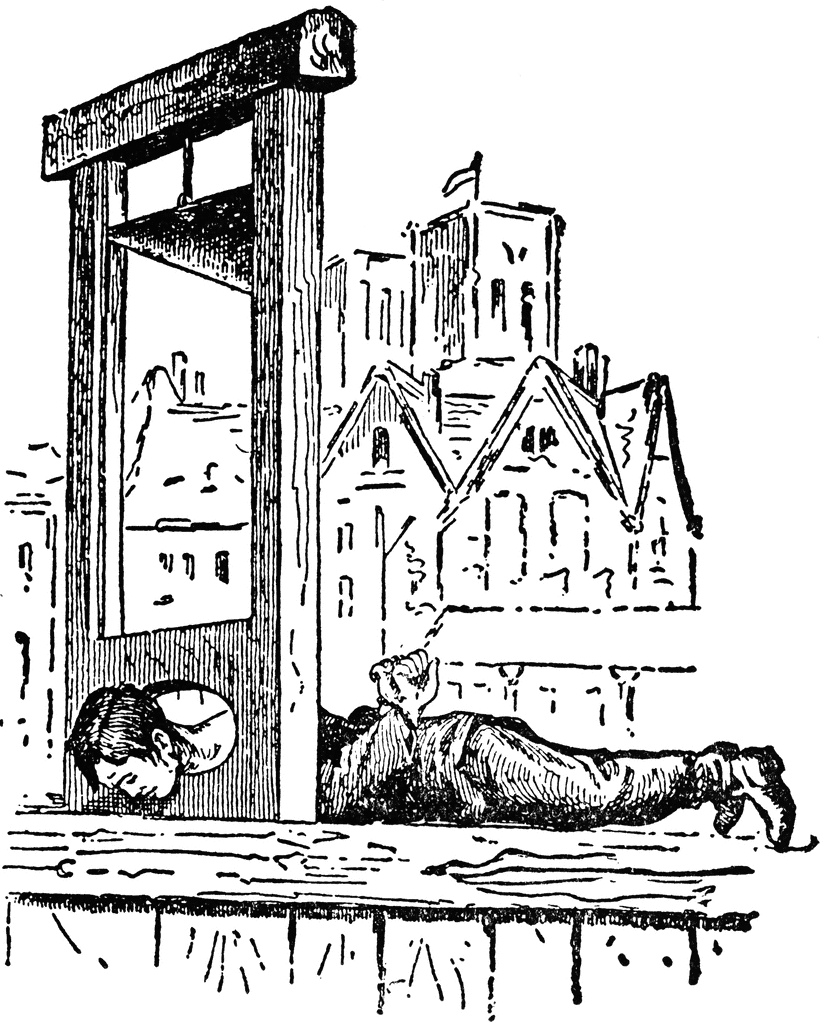
DEFINITION
Guillotine n.
1. Appareil consistant en une lourde lame retenue entre des montants, qui glisse vers le bas pour décapiter un condamné à mort. 2. Instrument servant par exemple à couper du papier, qui fonctionne selon le même principe qu'une guillotine.
tr.v.
1. Guillotiner.
2. Couper à l'aide d'un appareil rappelant une guillotine ou d'une lame tranchante.
The American Heritage Dictionary of the English Language
ETYMOLOGIE
Le mot guillotine a été formé à partir du nom du médecin français Joseph-Ignace Guillotin (1738-1814). L'appareil fut en fait conçu par le docteur Antoine Louis, secrétaire du Collège des chirurgiens, en vue de décapiter une personne de façon "indolore". Il fut utilisé pour la première fois le 25 avril 1792, pour exécuter un bandit de grand chemin appelé Pelletier ou Peletier. L'appareil était dénommé "louisette" or "louison", en l'honneur de son inventeur. Cependant, en raison d'un discours prononcé par le docteur Guillotin, le nom de ce dernier fut associé à cette machine. Après le décès de Guillotin en 1814, ses enfants essayèrent en vain d'obtenir une modification du nom de l'appareil. A la suite de l'échec de leurs efforts, ils obtinrent le droit de changer leur propre nom.
Hooligan

DEFINITION
Hooligan n.
Jeune agressif ou violent.The American Heritage Dictionary of the English Language
ETYMOLOGIE
Hooligan était le nom d'une famille irlandaise querelleuse dans une pièce de théâtre anglaise du début du XXe siècle. Le tsar Nicolas II assista à une représentation de cette pièce lors d'un passage à Londres. A la suite des observations qu'il formula au sujet de cette pièce lors de son retour en Russie, le mot “hooligan” entra dans le vocabulaire de la langue russe, dans lequel il est encore utilisé – de même qu'en anglais – pour désigner un vandale ou un jeune voyou.
Lynch
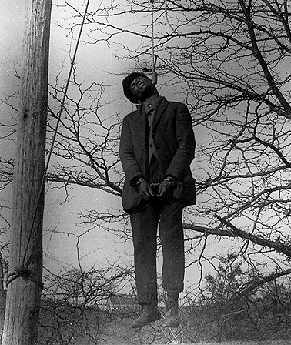
To lynch tr. v.
Punir (une personne) sans procès ou arbitrairement, en particulier par pendaison, parce qu'elle est censée avoir commis un crime ou par racisme.
The American Heritage Dictionary of the English Language
ETYMOLOGIE
Charles Lynch (1736-1796) était un riche planteur de Virginie qui exerçait des fonctions de juge. Il était connu pour avoir condamné un grand nombre de personnes à la pendaison.
Masochisme

DEFINITION
Masochism n.
1. Fait de retirer du plaisir sexuel ou tendance à en retirer de mauvais traitements physiques ou moraux.
2. Fait de retirer du plaisir ou tendance à en retirer d'humiliations ou de mauvais traitements infligés par autrui ou par soi-même.3. Tendance à s'imposer des épreuves pénibles.
ETYMOLOGIE
Leopold von Sacher-Masoch (1835-1895), romancier autrichien, écrivit des récits dans lesquels certains personnages retiraient du plaisir d'être maltraités, blessés ou humiliés.
The American Heritage Dictionary of the English Language
Sadist

DEFINITION
Sadist n.
Personne qui prend plaisir à faire souffrir autrui.
D'après WordNet 3.0,
ETYMOLOGIE
Donatien Alphonse François de Sade (1740-1814), couramment appelé Marquis de Sade, écrivit des romans dans lesquels certains personnages retirent une satisfaction sexuelle en faisant souffrir ou en infligeant des traitements dégradants à d'autres. Plusieurs de ses livres furent écrits au cours des longs séjours en prison auxquels il fut condamné pour avoir mis en pratique ses théories.
Sandwich

DEFINITION
Sandwich n.
a. Plusieurs tranches de pain entre lesquelles se trouve de la viande ou du fromage.b. Petit pain rond ou allongé contenant des aliments.
c. Tranche de pain sur laquelle on place des aliments.
The American Heritage Dictionary of the English Language
ETYMOLOGIE
Le quatrième comte de Sandwich, qui vécut (et s'adonna beaucoup au jeu) pendant le règne de Georges III, se faisait apporter par son serviteur de la viande placée entre des tranches de pain pour pouvoir rester à la table de jeu aux heures de repas. Il est aussi resté dans les mémoires parce que le capitaine Cook baptisa îles Sandwich des îles nouvellement découvertes dans l'océan Pacifique. Elles s'appellent de nos jours îles Hawaii.
SILHOUETTE

DEFINITION
Silhouette n.
Représentation d'un objet ou d'une scène consistant en une forme dépourvue de tout détail intérieur, généralement de couleur noire. Wikipedia
ETYMOLOGIE
Etienne de Silhouette. Le mot "silhouette", imprimé pour la première fois en Angleterre en 1798, provient du mot français identique, qui désigne une forme sombre qui se découpe sur un fond plus clair. Ce mot français semble avoir pour origine le nom d'Étienne de Silhouette (1709-1767), ministre des finances de la France en 1759. Diverses raisons ont été avancées pour expliquer l'honneur qui lui était ainsi fait. Selon certains, il ne s'agissait en fait pas d'un honneur car ce mot était utilisé avec dérision, peut-être du fait qu'il n'occupa le poste susmentionné que pendant une brève période. Il ne fit donc qu'une brève apparition, comme une ombre en quelque sorte. Le nom de famille "de Silhouette" (qui signifie originaire de la ville de Silhouette) est la forme française du nom de famille basque Zuloeta ou Zulueta. Le père d'Étienne de Silhouette était en effet originaire du pays Basque .
Source complémentaire : Native Tongues, de Charles Berlitz
mercredi 26 mai 2010
Maxine – we all love her, but who invented her?
Cet article a été rédigé par Jacquie Bridonneau, que je remercie.
I’m sure that there is not an American over the age of 20 who has not once chuckled, or broken out into uncontrollable laughter after seeing a picture of Maxine, the politically-incorrect, say what is on her mind, not trying to be loved and not caring lady. Always crabby and irreverent, but quite often hitting the nail straight on the head and witty, we either can identify with her directly, or see our mothers, grand-mothers, maiden aunts in her, unless we just say to others, “If I ever get like that, do me a favor, and just shoot me!”


Some typical Maxine advice:
1. Maxine on "Driver Safety" - "I can't use the cell phone in the car. I have to keep my hands free for making gestures."
2. Maxine on "Life" - "Life is like an oven. It burns my buns."
3. Maxine on "Housework" - "I do my housework in the nude. It gives me an incentive to clean the mirrors as quickly as possible."
4. Maxine on "Lawn Care" - "The key to a nice-looking lawn is a good mower. I recommend one who is muscular and shirtless."
5. Maxine on “Men" - "Chocolate is a woman’s reward for putting up with men."
6. Maxine on "Time Management" - "I find it helps to organize chores into categories: Things I won’t do now; Things I won’t do later; Things I’ll never do."
7. Maxine on "the Technology Revolution" - "My idea of rebooting is kicking somebody in the butt twice."
8. Maxine on "Aging" - "Take every birthday with a grain of salt. This works much better if the salt accompanies a large margarita."
Maxine was the brain-child of John Wagner, who works for Hallmark cards, not exactly where you would expect to find Maxine wisdom, but times have changed! In 1986, Shoebox Greetings, an alternative division of Hallmark Greeting Cards was formed, and John was able to use his memories of female role models in his life, including his mother, aunts, and the lady who introduced him to art lessons, to invent Maxine.
“Cartoonists are sensitive to the insanities of the world; we just try to humanize them," John said. "If Maxine can get a laugh out of someone who feels lonely or someone who is getting older and hates the thought of another birthday, or if she can make someone chuckle about stressful interpersonal relationships, then I'm happy. Putting a smile on someone's face is what it's all about."
And she does succeed in putting many smiles on many people’s faces! And how did she get her name? At first, she was just an elderly lady saying whatever came through her head in a card. Colleagues started referring to her as “John Wagner’s old lady” which of course, John rightly feared could quickly get him into bad trouble with his wife. A “Name the Old Lady” contest was held among the Shoebox team, and out of the 30 some suggestions, three said “Maxine” and the name seemed perfect and stuck.
 So, as Maxine would say, “Celebrate Benjamin Franklin’s birthday. Go fly a kite.”
I’m sure that there is not an American over the age of 20 who has not once chuckled, or broken out into uncontrollable laughter after seeing a picture of Maxine, the politically-incorrect, say what is on her mind, not trying to be loved and not caring lady. Always crabby and irreverent, but quite often hitting the nail straight on the head and witty, we either can identify with her directly, or see our mothers, grand-mothers, maiden aunts in her, unless we just say to others, “If I ever get like that, do me a favor, and just shoot me!”
Some typical Maxine advice:
1. Maxine on "Driver Safety" - "I can't use the cell phone in the car. I have to keep my hands free for making gestures."
2. Maxine on "Life" - "Life is like an oven. It burns my buns."
3. Maxine on "Housework" - "I do my housework in the nude. It gives me an incentive to clean the mirrors as quickly as possible."
4. Maxine on "Lawn Care" - "The key to a nice-looking lawn is a good mower. I recommend one who is muscular and shirtless."
5. Maxine on “Men" - "Chocolate is a woman’s reward for putting up with men."
6. Maxine on "Time Management" - "I find it helps to organize chores into categories: Things I won’t do now; Things I won’t do later; Things I’ll never do."
7. Maxine on "the Technology Revolution" - "My idea of rebooting is kicking somebody in the butt twice."
8. Maxine on "Aging" - "Take every birthday with a grain of salt. This works much better if the salt accompanies a large margarita."
Maxine was the brain-child of John Wagner, who works for Hallmark cards, not exactly where you would expect to find Maxine wisdom, but times have changed! In 1986, Shoebox Greetings, an alternative division of Hallmark Greeting Cards was formed, and John was able to use his memories of female role models in his life, including his mother, aunts, and the lady who introduced him to art lessons, to invent Maxine.
“Cartoonists are sensitive to the insanities of the world; we just try to humanize them," John said. "If Maxine can get a laugh out of someone who feels lonely or someone who is getting older and hates the thought of another birthday, or if she can make someone chuckle about stressful interpersonal relationships, then I'm happy. Putting a smile on someone's face is what it's all about."
And she does succeed in putting many smiles on many people’s faces! And how did she get her name? At first, she was just an elderly lady saying whatever came through her head in a card. Colleagues started referring to her as “John Wagner’s old lady” which of course, John rightly feared could quickly get him into bad trouble with his wife. A “Name the Old Lady” contest was held among the Shoebox team, and out of the 30 some suggestions, three said “Maxine” and the name seemed perfect and stuck.
lundi 24 mai 2010
COWBOYS AND INDIANS
Le présent billet a été rédigé par Jonathan Goldberg, que je remercie.
The role of the cowboy in the American West was to herd the cattle on the wide open range -- to prevent them straying and to move them to different grazing areas.
When ranchers began to fence in their cattle in enclosures, the need for cowboys was reduced. For the cowboys this meant the end of their lives on the range and, understandably, they didn’t want to be “fenced in”.
Beginning in the 1920s and continuing to the present day, “Western” movies popularized the rugged outdoor life of cowboys. These films often presented fights between the cowboys and the indigenous, native Americans (called “Indians”), based on crude stereotypes. To this day, the expression “cowboys and Indians” means “the good guys and the bad guys.”
Roy Rogers (1911-1988) was a legendary American singer and actor known as The Singing Cowboy. A song made famous by Roy Rogers in 1944, and later sung by other singers of that era, was Don’t Fence Me In (Laisse-moi ma liberté).
http://www.youtube.com/watch?v=e3ebEEe8VEw
The lyrics of the song expressed that desire not to be closed in.
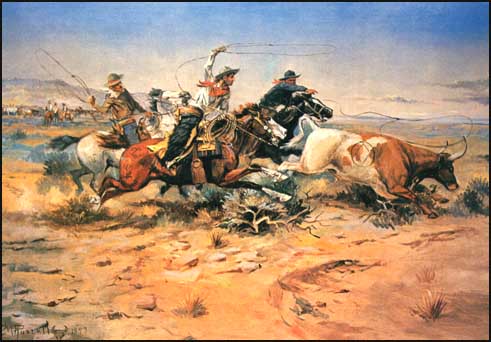
A humorous French-English version of Don’t Fence Me In, sung by Dean Martin and Mireille Mathieu, may be heard on this video clip:
http://www.youtube.com/watch?v=tmh3v8TPyn4
Linguistic Note:
The word “fence” has different meanings in different contexts. As a noun, its common meaning is a barrier (clôture). It can also refer to a person who trades in stolen goods (receleur). Fencing is a sport (escrime), as well as the material used to make a fence (matériau pour clôture). A fencer is un escrimeur. To fence with a sword or sabre is tirer à l’épée/au sabre. To fence off usually means to separate a piece of land from its surroundings (séparer par une clôture). A sunken fence (saut-de-loup) surrounding a garden with its top at the garden ground level, bounded with a ditch on the outer side, is also known as a ha-ha: http://fr.wikipedia.org/wiki/Ha-ha (1). This keeps off sheep and cattle, without obstructing the view. The origin of that term is French (World Wide Words).
The American Heritage® Dictionary of the English Language, Fourth Edition contains the following definitions:
Fence:
Noun:
1. A structure serving as an enclosure, a barrier, or a boundary, usually made of posts or stakes joined together by boards, wire, or rails.
2. The art or sport of fencing.
3. a. One who receives and sells stolen goods.
b. A place where stolen goods are received and sold.
Transitive verb:
1. To enclose with or as if with a fence.
2. To separate or close off by or as if by means of a fence.
3. To sell (stolen goods) to a fence.
Intransitive verb:
1. To practice the art or sport of fencing.
2. To use tactics similar to the parry and thrust of fencing.
3. To avoid giving direct answers; hedge.
4. To act as a conduit for stolen goods.
Several idioms containing the word fence exist in English:
- To mend fences – rétablir de bonnes relations; se réconcilier (après un désaccord)
- To sit on the fence – ménager la chèvre et le chou
So do some proverbs:
- Good fences make good neighbors (from the 17th century but made famous by Robert Frost’s poem, “Mending Wall”).
- Do not protect yourself by a fence, but rather by your friends (Polish);
- The grass is always greener on the other side of the fence;
- Make not a fence more expensive or more important than the thing that is fenced (Hebrew).
(1) Ha Ha (1712): this 18th-century garden feature consisted of a trench, the inner side perpendicular and faced with stone, the outer sloping and turfed, that was intended to allow the landowner an uninterrupted view of the countryside. It came from the French word haha ‘…a ditch behind an opening in a wall at the bottom of an alley or walk’. According to French etymologists the ha! is an exclamation of surprise – or could it be fear?
http://www.askoxford.com/worldofwords/wordfrom/garden/
The role of the cowboy in the American West was to herd the cattle on the wide open range -- to prevent them straying and to move them to different grazing areas.
When ranchers began to fence in their cattle in enclosures, the need for cowboys was reduced. For the cowboys this meant the end of their lives on the range and, understandably, they didn’t want to be “fenced in”.
Beginning in the 1920s and continuing to the present day, “Western” movies popularized the rugged outdoor life of cowboys. These films often presented fights between the cowboys and the indigenous, native Americans (called “Indians”), based on crude stereotypes. To this day, the expression “cowboys and Indians” means “the good guys and the bad guys.”
Roy Rogers (1911-1988) was a legendary American singer and actor known as The Singing Cowboy. A song made famous by Roy Rogers in 1944, and later sung by other singers of that era, was Don’t Fence Me In (Laisse-moi ma liberté).
http://www.youtube.com/watch?v=e3ebEEe8VEw
The lyrics of the song expressed that desire not to be closed in.
A humorous French-English version of Don’t Fence Me In, sung by Dean Martin and Mireille Mathieu, may be heard on this video clip:
http://www.youtube.com/watch?v=tmh3v8TPyn4
Linguistic Note:
The word “fence” has different meanings in different contexts. As a noun, its common meaning is a barrier (clôture). It can also refer to a person who trades in stolen goods (receleur). Fencing is a sport (escrime), as well as the material used to make a fence (matériau pour clôture). A fencer is un escrimeur. To fence with a sword or sabre is tirer à l’épée/au sabre. To fence off usually means to separate a piece of land from its surroundings (séparer par une clôture). A sunken fence (saut-de-loup) surrounding a garden with its top at the garden ground level, bounded with a ditch on the outer side, is also known as a ha-ha: http://fr.wikipedia.org/wiki/Ha-ha (1). This keeps off sheep and cattle, without obstructing the view. The origin of that term is French (World Wide Words).
The American Heritage® Dictionary of the English Language, Fourth Edition contains the following definitions:
Fence:
Noun:
1. A structure serving as an enclosure, a barrier, or a boundary, usually made of posts or stakes joined together by boards, wire, or rails.
2. The art or sport of fencing.
3. a. One who receives and sells stolen goods.
b. A place where stolen goods are received and sold.
Transitive verb:
1. To enclose with or as if with a fence.
2. To separate or close off by or as if by means of a fence.
3. To sell (stolen goods) to a fence.
Intransitive verb:
1. To practice the art or sport of fencing.
2. To use tactics similar to the parry and thrust of fencing.
3. To avoid giving direct answers; hedge.
4. To act as a conduit for stolen goods.
Several idioms containing the word fence exist in English:
- To mend fences – rétablir de bonnes relations; se réconcilier (après un désaccord)
- To sit on the fence – ménager la chèvre et le chou
So do some proverbs:
- Good fences make good neighbors (from the 17th century but made famous by Robert Frost’s poem, “Mending Wall”).
- Do not protect yourself by a fence, but rather by your friends (Polish);
- The grass is always greener on the other side of the fence;
- Make not a fence more expensive or more important than the thing that is fenced (Hebrew).
(1) Ha Ha (1712): this 18th-century garden feature consisted of a trench, the inner side perpendicular and faced with stone, the outer sloping and turfed, that was intended to allow the landowner an uninterrupted view of the countryside. It came from the French word haha ‘…a ditch behind an opening in a wall at the bottom of an alley or walk’. According to French etymologists the ha! is an exclamation of surprise – or could it be fear?
http://www.askoxford.com/worldofwords/wordfrom/garden/
dimanche 23 mai 2010
“Money, money, money” (English)
Le présent billet a été rédigé par Jacquie Bridonneau, que je remercie.
Whether or not you were already born when Abba was singing this song, you have probably at least danced to the lyrics:
 But speaking of money, in Europe we use the euro; in the US we use the dollar: different countries have different names for their currency. Today we’re going to have a short look at both the euro and the dollar, to find out where these names came from.
The euro is quite a young currency: it was launched as a virtual currency on January 1, 1999, before it actually started to circulate as legal tender in twelve Europeans countries (Germany, France, Italy, Spain, Portugal, Belgium, Luxembourg, the Netherlands, Austria, Finland, Greece and Ireland) on January 1, 2002. This meant that the Austrian schilling, the Belgian franc, the Finnish markka, the French franc, the German mark, the Greek drachma, the Italian lira, the Irish punt, the Luxembourg franc, the Netherlands guilder, the Portuguese escudo and the Spanish peseta were all replaced at that time with varying levels of difficulty, by the euro.
So with all these countries speaking quite a few different languages, who decided on the name of the common currency? At first the European Monetary Institute (EMI), established in 1994, had been using the abbreviation ECU for the forthcoming currency, the “European Currency Unit.” An “ecu” is also the name of the gold or silver coins that were used in France starting with the reign of Louis IX in 1266, so that was an easy name for French people to remember when they learned they would be forced to give up their beloved French francs. However, a meeting took place in Madrid in 1995 to officially give the European currency starting date and name the currency, and Germans were promoting the Euromark, French preferred the Eurofranc, English the Europound, and agreement was finally found with the Dutch proposal “Gentleman, what if we used the first four letters.” And thus the euro was officially baptized.
 So what about the dollar? The United States is a relatively new country, when compared to Europe. Most of the original European inhabitants fled England, where the official currency was the pound. What was wrong with naming the American currency the American pound for example?
The word “dollar” itself, is much older than the American currency, and is derived from the “thaler”, coins that were first minted back in 1519 from silver, mined in the town of Joachimsthal, which was located in the country then called Bohemia. Spanish pesos and Portuguese eight-real coins (we have all heard of “pieces of eight” from pirate stories,) were also at this time called dollars, as they had a similar weight, appearance, and value. Both of these coins circulated widely in the British North American colonies, because of a shortage in British currency. Wampum beads were also used as currency especially in the north, as was tobacco, or certificates for tobacco in warehouses in Virginia. There was also foreign currency circulating. In 1792, the United States, which had just been independent for a short time, officially chose the dollar, sub-divided into 100 cents, as its official currency.
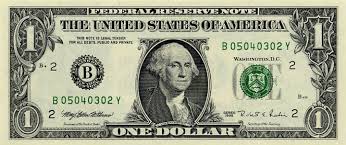 Dollars are also used as currency in many other different countries now, including Canada, Zimbabwe, Australia, Hong-Kong, Singapore and New Zealand.
Whether or not you were already born when Abba was singing this song, you have probably at least danced to the lyrics:
Money, money, money
Must be funny
In the rich man's world
Money, money, money
Always sunny
In the rich man's world
Aha-ahaaa
All the things I could do
If I had a little money
It's a rich man's world”.
The euro is quite a young currency: it was launched as a virtual currency on January 1, 1999, before it actually started to circulate as legal tender in twelve Europeans countries (Germany, France, Italy, Spain, Portugal, Belgium, Luxembourg, the Netherlands, Austria, Finland, Greece and Ireland) on January 1, 2002. This meant that the Austrian schilling, the Belgian franc, the Finnish markka, the French franc, the German mark, the Greek drachma, the Italian lira, the Irish punt, the Luxembourg franc, the Netherlands guilder, the Portuguese escudo and the Spanish peseta were all replaced at that time with varying levels of difficulty, by the euro.
So with all these countries speaking quite a few different languages, who decided on the name of the common currency? At first the European Monetary Institute (EMI), established in 1994, had been using the abbreviation ECU for the forthcoming currency, the “European Currency Unit.” An “ecu” is also the name of the gold or silver coins that were used in France starting with the reign of Louis IX in 1266, so that was an easy name for French people to remember when they learned they would be forced to give up their beloved French francs. However, a meeting took place in Madrid in 1995 to officially give the European currency starting date and name the currency, and Germans were promoting the Euromark, French preferred the Eurofranc, English the Europound, and agreement was finally found with the Dutch proposal “Gentleman, what if we used the first four letters.” And thus the euro was officially baptized.
The word “dollar” itself, is much older than the American currency, and is derived from the “thaler”, coins that were first minted back in 1519 from silver, mined in the town of Joachimsthal, which was located in the country then called Bohemia. Spanish pesos and Portuguese eight-real coins (we have all heard of “pieces of eight” from pirate stories,) were also at this time called dollars, as they had a similar weight, appearance, and value. Both of these coins circulated widely in the British North American colonies, because of a shortage in British currency. Wampum beads were also used as currency especially in the north, as was tobacco, or certificates for tobacco in warehouses in Virginia. There was also foreign currency circulating. In 1792, the United States, which had just been independent for a short time, officially chose the dollar, sub-divided into 100 cents, as its official currency.
samedi 22 mai 2010
Le verbe « to hang » : toutes les nuances
La version anglaise du présent article de Jonathan Goldberg a été publiée il y a quelques jours sous le titre The Results of the British Elections
Quelques observations linguistiques sur to hang, being hanged et being hung
Le verbe to hang a deux participes : hung and hanged. Hung s'utilise pour qualifier un objet (par exemple un tableau accroché à un mur) ou un jury divisé ou un parlement sans majorité, tandis que hanged se rapporte à une personne exécutée par pendaison.


Passé simple et participe passé de hang (sauf dans le sens d'exécuter par pendaison ou dans l'expression idiomatique I'll be hanged if I know : le diable m'emporte si je le sais).
adj.
1. a. (assemblée législative) dépouvu de parti détenant la majorité absolue ; a hung parliament : un parlement sans majorité
b. incapable de parvenir à une décision ; a hung jury un jury divisé
c. (situation) impossible à résoudre
hung over Familier souffrant d'une gueule de bois
hung up Argot
a. en proie à des difficultés ou retardé
b. dans un état de confusion ; présentant des troubles affectifs
hung up on Argot Obsédé ou intéressé exclusivement par
Collins English Dictionary – Complete and Unabridged 1991, 1994, 1998, 2000, 2003
to hang out
1. pendre ; p. ex. The dog's tongue was hanging out ou The branches hung out over the driveway. [vers 1400]
2. Arborer (un drapeau) ou montrer (un signe) ; p. ex. They hung out the flag on every holiday. [vers les années 1500]
3. Résider, vivre ; I've found a place downtown, and I'll be hanging out there beginning next week. [vers 1800]
4. Traîner, passer le temps ; p. ex. They hung out around the pool parlor ou They spent the evening just hanging out. [argot ; milieu des années 1900]
5. To hang out with. Fréquenter, se montre en public avec ; p. ex. She's hanging out with her ex-boyfriend again. [argot ; seconde moitié des années 1900]. Voir aussi les expressions idiomatiques comprenant hang out ; let it all hang out.
Verbes à particule
hang back
Hésiter à agir ; s'abstenir de parler ou d'agir.
hang in Familier
Persévérer : decided to hang in despite his illness.
hang off
Hésiter à agir ; s'abstenir de parler ou d'agir.
hang on
1. Tenir fermement quelque chose.
2. Persévérer.
3. Ne pas quitter (lors d'une communication téléphonique).
4. Attendre un peu.
hang together
1. Etre uni ou solidaire ; "We must all hang together, or assuredly we shall all hang separately" (Benjamin Franklin).
2. Former un tout cohérent : diverse plot lines that did not hang together.
hang up
1. Suspendre à un crochet ou à un ceintre.
2. a. Raccrocher (un combiné de téléphone).
b. Mettre fin à une conversation téléphonique.
3. a. Etre bloqué ou rester coincé : The fishing line hung up on a rock.
b. Familier Eprouver des problèmes émotionnels ou des inhibitions, ou en provoquer.
Expressions idiomatiques
give/care a hang
Se soucier, se préoccuper ; I don't give a hang what you do.
hang fire
1. Tarder à agir : "They are people who hung fire even through the bloody days of the Hungarian Revolution" (Mark Muro).
2. Tarder à faire feu, avec un pistolet.
hang in there Familier
Persévérer malgré les difficultés ; persister ; She hung in there despite pressure to resign.
hang it up Familier
Renoncer.
hang loose Argot
Rester calme ou détendu.
hang (one's) hat
S'établir ; prendre résidence ; I hung my hat in Chicago.
hang on to
Garder ; ne pas se séparer de ; Hang on to your money.
hang tough Familier
Faire preuve d'une ferme résolution ; "We are going to hang tough on this" (Donald T. Regan).
let it all hang out Argot
1. Etre totalement détendu.
2. Etrre d'une franchise totale.
hanged v. Passé et participe passé de to hang.
The American Heritage® Dictionary of the English Language, Fourth Edition copyright ©2000 by Houghton Mifflin Company. Updated in 2009. Published by Houghton Mifflin Company.
Proverbes comprenant le mot hang
He that is born to be hanged shall never be drowned.
Celui qui est né pour être pendu ne se noiera jamais.
Proverbe roumain
Save a thief from the gallows and he will help to hang you.
Si vous sauvez un voleur du gibet, il aidera ceux qui vous pendront.
Proverbe roumain
Never mention rope in the house of a man who has been hanged.
Ne parlez jamais de corde dans la maison d'un pendu.
Proverbe roumain
He that killeth a man when he is drunk must be hanged when he is sober.
Celui qui a tué un homme sous l'emprise de l'alcool doit être pendu quand il est dégrisé
Proverbe roumain
If you would not live to be old, you must be hanged when you are young.
Si vous ne voulez pas vivre vieux, vous devez être pendu tant que vous êtes jeune.
Proverbe roumain
What good is a golden gallows if they are going to hang you?
A quoi bon une potence en or si c'est vous que l'on va pendre ?
Proverbe suisse
The man dying to hang himself can always find a noose.
L'homme qui tient absolument à se pendre trouvera toujours une corde.
Proverbe afghan
A HUNG PARLIAMENT
Un parlement sans majorité
Quelques observations linguistiques sur to hang, being hanged et being hung
Le verbe to hang a deux participes : hung and hanged. Hung s'utilise pour qualifier un objet (par exemple un tableau accroché à un mur) ou un jury divisé ou un parlement sans majorité, tandis que hanged se rapporte à une personne exécutée par pendaison.

Cette reproduction est accrochée au mur

Un pendu
hung v.Passé simple et participe passé de hang (sauf dans le sens d'exécuter par pendaison ou dans l'expression idiomatique I'll be hanged if I know : le diable m'emporte si je le sais).
adj.
1. a. (assemblée législative) dépouvu de parti détenant la majorité absolue ; a hung parliament : un parlement sans majorité
b. incapable de parvenir à une décision ; a hung jury un jury divisé
c. (situation) impossible à résoudre
hung over Familier souffrant d'une gueule de bois
hung up Argot
a. en proie à des difficultés ou retardé
b. dans un état de confusion ; présentant des troubles affectifs
hung up on Argot Obsédé ou intéressé exclusivement par
Collins English Dictionary – Complete and Unabridged 1991, 1994, 1998, 2000, 2003
to hang out
1. pendre ; p. ex. The dog's tongue was hanging out ou The branches hung out over the driveway. [vers 1400]
2. Arborer (un drapeau) ou montrer (un signe) ; p. ex. They hung out the flag on every holiday. [vers les années 1500]
3. Résider, vivre ; I've found a place downtown, and I'll be hanging out there beginning next week. [vers 1800]
4. Traîner, passer le temps ; p. ex. They hung out around the pool parlor ou They spent the evening just hanging out. [argot ; milieu des années 1900]
5. To hang out with. Fréquenter, se montre en public avec ; p. ex. She's hanging out with her ex-boyfriend again. [argot ; seconde moitié des années 1900]. Voir aussi les expressions idiomatiques comprenant hang out ; let it all hang out.
Verbes à particule
hang back
Hésiter à agir ; s'abstenir de parler ou d'agir.
hang in Familier
Persévérer : decided to hang in despite his illness.
hang off
Hésiter à agir ; s'abstenir de parler ou d'agir.
hang on
1. Tenir fermement quelque chose.
2. Persévérer.
3. Ne pas quitter (lors d'une communication téléphonique).
4. Attendre un peu.
hang together
1. Etre uni ou solidaire ; "We must all hang together, or assuredly we shall all hang separately" (Benjamin Franklin).
2. Former un tout cohérent : diverse plot lines that did not hang together.
hang up
1. Suspendre à un crochet ou à un ceintre.
2. a. Raccrocher (un combiné de téléphone).
b. Mettre fin à une conversation téléphonique.
3. a. Etre bloqué ou rester coincé : The fishing line hung up on a rock.
b. Familier Eprouver des problèmes émotionnels ou des inhibitions, ou en provoquer.
Expressions idiomatiques
give/care a hang
Se soucier, se préoccuper ; I don't give a hang what you do.
hang fire
1. Tarder à agir : "They are people who hung fire even through the bloody days of the Hungarian Revolution" (Mark Muro).
2. Tarder à faire feu, avec un pistolet.
hang in there Familier
Persévérer malgré les difficultés ; persister ; She hung in there despite pressure to resign.
hang it up Familier
Renoncer.
hang loose Argot
Rester calme ou détendu.
hang (one's) hat
S'établir ; prendre résidence ; I hung my hat in Chicago.
hang on to
Garder ; ne pas se séparer de ; Hang on to your money.
hang tough Familier
Faire preuve d'une ferme résolution ; "We are going to hang tough on this" (Donald T. Regan).
let it all hang out Argot
1. Etre totalement détendu.
2. Etrre d'une franchise totale.
hanged v. Passé et participe passé de to hang.
The American Heritage® Dictionary of the English Language, Fourth Edition copyright ©2000 by Houghton Mifflin Company. Updated in 2009. Published by Houghton Mifflin Company.
Proverbes comprenant le mot hang
He that is born to be hanged shall never be drowned.
Celui qui est né pour être pendu ne se noiera jamais.
Proverbe roumain
Save a thief from the gallows and he will help to hang you.
Si vous sauvez un voleur du gibet, il aidera ceux qui vous pendront.
Proverbe roumain
Never mention rope in the house of a man who has been hanged.
Ne parlez jamais de corde dans la maison d'un pendu.
Proverbe roumain
He that killeth a man when he is drunk must be hanged when he is sober.
Celui qui a tué un homme sous l'emprise de l'alcool doit être pendu quand il est dégrisé
Proverbe roumain
If you would not live to be old, you must be hanged when you are young.
Si vous ne voulez pas vivre vieux, vous devez être pendu tant que vous êtes jeune.
Proverbe roumain
What good is a golden gallows if they are going to hang you?
A quoi bon une potence en or si c'est vous que l'on va pendre ?
Proverbe suisse
The man dying to hang himself can always find a noose.
L'homme qui tient absolument à se pendre trouvera toujours une corde.
Proverbe afghan
Les guêpes, les juifs et les catholiques
Le présent billet a été rédigé par Jonathan Goldberg, que je remercie.

Le mot anglais wasp signifie guêpe mais, quand il est écrit en majuscules, il est un acronyme : White Anglo-Saxon Protestant (WASP). Les protestants constituent la majorité de la population américaine (51,3%), alors que les catholiques représentent 23,9% et les juifs 1,7%. (Source : The PEW Forum on Religion & Public Life.)
La Cour suprême des Etats-Unis perdra prochainement son dernier membre protestant, quand le juge Stevens prendra sa retraite. Le Président Obama a déjà désigné le Professeur Kagan, une femme, pour le remplacer.

Si cette désignation est confirmée, il y aura six catholiques et trois juifs à la Cour suprême. Pour la première fois depuis la création de la Cour en 1789 (1), il n’y aura pas de protestant.
Il reste à savoir si les arrêts de la Cour, qui désormais ne refléteront l’opinion d’aucun WASP, seront moins piquants que par le passé.
Pour une analyse plus approfondie de cette nouvelle situation judiciaire, voir un article récemment publié dans le Los Angeles Times, intitulé Kagan and the Triumph of WASP Culture.
http://www.latimes.com/news/opinion/commentary/la-oe-rodriguez-wasps-20100517,0,5584536.column
(1) http://fr.wikipedia.org/wiki/Cour_supr%C3%AAme_des_%C3%89tats-Unis
Le mot anglais wasp signifie guêpe mais, quand il est écrit en majuscules, il est un acronyme : White Anglo-Saxon Protestant (WASP). Les protestants constituent la majorité de la population américaine (51,3%), alors que les catholiques représentent 23,9% et les juifs 1,7%. (Source : The PEW Forum on Religion & Public Life.)
La Cour suprême des Etats-Unis perdra prochainement son dernier membre protestant, quand le juge Stevens prendra sa retraite. Le Président Obama a déjà désigné le Professeur Kagan, une femme, pour le remplacer.
Elena Kagan
Si cette désignation est confirmée, il y aura six catholiques et trois juifs à la Cour suprême. Pour la première fois depuis la création de la Cour en 1789 (1), il n’y aura pas de protestant.
Il reste à savoir si les arrêts de la Cour, qui désormais ne refléteront l’opinion d’aucun WASP, seront moins piquants que par le passé.
Pour une analyse plus approfondie de cette nouvelle situation judiciaire, voir un article récemment publié dans le Los Angeles Times, intitulé Kagan and the Triumph of WASP Culture.
http://www.latimes.com/news/opinion/commentary/la-oe-rodriguez-wasps-20100517,0,5584536.column
(1) http://fr.wikipedia.org/wiki/Cour_supr%C3%AAme_des_%C3%89tats-Unis
samedi 15 mai 2010
Vernissage
La version anglaise du présent article de Jonathan Goldberg a été publiée il y a quelques jours sous le titre Varnishing and Polishing.
Le Los Angeles Times a récemment publié un article consacré à l’une des « case study houses » (maisons fonctionnelles et économiques) du célèbre architecte Pierre Koenig, située à Hollywood (à trois minutes de chez moi) et propriété d’un collectionneur d’art qui préfère garder l’anonymat. Cet article, qui mentionne que des tableaux coréens y sont exposés, contient la phrase suivante : « At the vernissage last month, VIPs rubbed elbows… » (Le mois dernier, le vernissage a rassemblé des personnalités connues...)
Le mot français vernissage, repris tel quel en anglais, a une étymologie intéressante : il est formé à partir de vernis, qui lui même provient de Berenik, le nom d’une ancienne ville de Cyrénaïque (région d'Afrique du Nord), dans laquelle des résines naturelles furent pour la première fois utilisées comme vernis.
L’une des définitions du mot vernissage qui figurent dans le Collins English Dictionary est « varnishing day », expression qui signifie désigne le jour où un artiste peut vernir ou retoucher ses tableaux, avant l’ouverture d’une exposition.
Le journaliste du Los Angeles Times voulait-il dire que des ouvriers étaient encore en train de vernir des surfaces en bois dans la maison où les personnalités connues s’étaient rassemblées ? Non, il utilisait le mot vernissage dans un autre sens :
a private showing held before the opening of an art exhibition (The American Heritage Dictionary of the English Language) (présentation privée de tableaux avant l’ouverture d’une exposition) ;
a preview or the opening or first day of an exhibition of paintings (Collins English Dictionary) (présentation en avant-première de tableaux, ouverture ou premier jour d’une exposition de tableaux).
La première définition et les deux dernières semblent bien différentes, mais il existe un lien entre elles, car il était un temps où le vernissage au sens propre du terme avait lieu la veille de l’ouverture officielle d’une exposition de toiles, ce qui permettait aux artistes de les vernir ou de les retoucher. Par la suite, le mot prit un sens plus large et désigna le premier jour d’exposition des tableaux, qu’il s’agisse d’une avant-première ou de l’ouverture de l’exposition.
Non loin de la maison conçue par Pierre Koenig se trouve le Hollywood Bowl, où l’Orchestre philharmonique de Los Angeles, placé sous la direction de Gustavo Dudamel, donnera un concert cet été. A n’en pas douter, ceux qui pourront y assister seront... vernis.
Le Los Angeles Times a récemment publié un article consacré à l’une des « case study houses » (maisons fonctionnelles et économiques) du célèbre architecte Pierre Koenig, située à Hollywood (à trois minutes de chez moi) et propriété d’un collectionneur d’art qui préfère garder l’anonymat. Cet article, qui mentionne que des tableaux coréens y sont exposés, contient la phrase suivante : « At the vernissage last month, VIPs rubbed elbows… » (Le mois dernier, le vernissage a rassemblé des personnalités connues...)
Le mot français vernissage, repris tel quel en anglais, a une étymologie intéressante : il est formé à partir de vernis, qui lui même provient de Berenik, le nom d’une ancienne ville de Cyrénaïque (région d'Afrique du Nord), dans laquelle des résines naturelles furent pour la première fois utilisées comme vernis.
L’une des définitions du mot vernissage qui figurent dans le Collins English Dictionary est « varnishing day », expression qui signifie désigne le jour où un artiste peut vernir ou retoucher ses tableaux, avant l’ouverture d’une exposition.
Le journaliste du Los Angeles Times voulait-il dire que des ouvriers étaient encore en train de vernir des surfaces en bois dans la maison où les personnalités connues s’étaient rassemblées ? Non, il utilisait le mot vernissage dans un autre sens :
a private showing held before the opening of an art exhibition (The American Heritage Dictionary of the English Language) (présentation privée de tableaux avant l’ouverture d’une exposition) ;
a preview or the opening or first day of an exhibition of paintings (Collins English Dictionary) (présentation en avant-première de tableaux, ouverture ou premier jour d’une exposition de tableaux).
La première définition et les deux dernières semblent bien différentes, mais il existe un lien entre elles, car il était un temps où le vernissage au sens propre du terme avait lieu la veille de l’ouverture officielle d’une exposition de toiles, ce qui permettait aux artistes de les vernir ou de les retoucher. Par la suite, le mot prit un sens plus large et désigna le premier jour d’exposition des tableaux, qu’il s’agisse d’une avant-première ou de l’ouverture de l’exposition.
Non loin de la maison conçue par Pierre Koenig se trouve le Hollywood Bowl, où l’Orchestre philharmonique de Los Angeles, placé sous la direction de Gustavo Dudamel, donnera un concert cet été. A n’en pas douter, ceux qui pourront y assister seront... vernis.
jeudi 13 mai 2010
Top 100 Language Blogs 2010
Votez pour votre blog favori dans la catégorie Language Professionals. Il suffit de vous rendre sur le site LexioPhiles.
Le présent blog a été nommé, mais le site LexioPhiles vous permet d'accéder à d'autres blogs, que vous jugerez peut-être plus intéressants.
Votez nombreux et souvent ! Sauf qu'on ne peut voter qu'une fois. Alors ne gaspillez pas votre voix !
Le présent blog a été nommé, mais le site LexioPhiles vous permet d'accéder à d'autres blogs, que vous jugerez peut-être plus intéressants.
Votez nombreux et souvent ! Sauf qu'on ne peut voter qu'une fois. Alors ne gaspillez pas votre voix !
Inscription à :
Articles (Atom)