En vedette

lundi 28 juin 2010

The American Spelling Bee

Le présent article a été rédigé par Jonathan Goldberg, que je remercie. Une traduction en français sera publiée dans quelques jours.

Some languages, like Spanish, are phonetic. Others like English and French are not. Persons with very little knowledge of Spanish, given a Spanish text, which they don’t understand a word of, could, nevertheless, read it aloud in a way that would be largely intelligible to a native Spanish speaker (except that the accent might be placed on the wrong parts of many words in the text). For French, this would not be so, due, for example to the large number of words in which the last letter is silent (e.g. toit, aux, quand, janvier) and, in some cases where the last syllable is not pronounced (e.g. assurent, veille, fesses). In English, the discrepancy between the pronunciation of words and their spelling is much more prevalent.

The Irish playwright, George Bernard Shaw, is said to have joked that the word ‘fish’ could legitimately be spelled ‘ghoti’ by using the ‘gh’ sound as it is pronounced in ‘enough’, the ‘o’ sound as it is pronounced in ‘women’ and the ‘ti’ sound as it is pronounced in ‘action’. The true source of that statement was not in fact in Shaw, and the argument propounded has, moreover, been rebutted. In the Language Column of the New York Times, dated June 27, 2010, linguist Ben Zimmer discusses this and concludes “If presented with ghoti, most people would simply pronounce it as goaty… English isn’t entirely a free-for-all”.

The large number of irregular spellings in English, as well as the extensive vocabulary of the English language, (although very many words are rarely used), has given rise to an American tradition: the Spelling Bee. The Collins English Dictionary, Complete and Unabridged, defines this as a contest in which players are required to spell words according to orthographic conventions. For the origin of this term, access this link. Noah Webster (1758 – 1843) wrote the first English speller in 1783. It was originally entitled The First Part of the Grammatical Institute of the English Language. Over the course of 385 editions in his lifetime, the title was changed in 1786 to The American Spelling Book, and again in 1829 to The Elementary Spelling Book. It was the most popular American book of its time; by 1837 it had sold 15 million copies, and some 60 million by 1890—reaching the majority of young students in the nation's first century. For Webster’s role in the development of English in the USA, see the Wikipedia article, Noah Webster.

The National Spelling Bee has taken place annually in Washington D.C. since 1945. The participants range in age from 8 to 15 years, but 80% of them are between the ages of 12 and 14, and in some cases as young as eight. In each round, each participant is given a word, and he or she may request a limited amount of information about the word required to be spelled, e.g. the origin of the word, a definition, a sentence containing the word. If a participant misspells one word, he or she is eliminated from the competition.

The 2010 Bee took place earlier this month,. A disproportionate number of both the participants and the winners over the years have been of Asian origin. For the 273 participants in 2010, English was not the first language of 21 of them, and 102 spellers spoke languages other than English. The pronouncer, Dr. Jacques A. Bailly, is fluent in French and German, and teaches ancient Greek and Latin.

The 2010 winner was Anamika Veeramani. Her prize was $41,000.

http://www.youtube.com/watch?v=hq4GDrp5fEc

In the final round, she correctly spelled stromuhr, a word of German origin, which means “An instrument for measuring the quantity of blood that flows per unit of time through a blood vessel.”
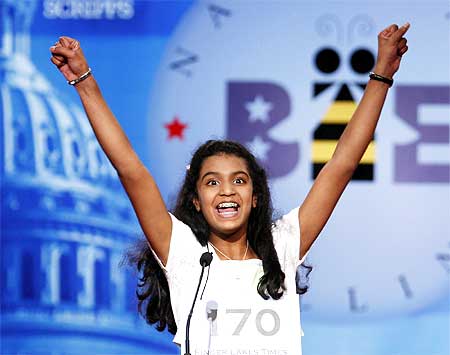

Anamika Veeramani

The winning words in recent competitions have included: pococurante; autochthonous; appoggiatura; ursprache; serrefine; guerdon; Laodicean.

The following videoclip shows 13-year old Sameer Mishra correctly spelling the word numnah, which is another word for numdah and means coarse felt, a horse’s saddle pad made from this or an embroidered rug made from this.

http://www.youtube.com/watch?v=VjzrNWPul9E

A detailed description of the 2010 competition is to be found at http://www.spellingbee.com/. You can try the test based on the 2009 words at http://www.spellingbee.com/sample-test

In a fascinating book, American Bee: The National Spelling Bee and the Culture of Word Nerds, the author, James Maguire, follows the lives of the 2005 participants as they prepare to participate months ahead of the preliminary rounds, reading complete dictionaries and studying etymology.

                                                                                          Jonathan Goldberg

mercredi 23 juin 2010

Football (soccer) and American football quotes # 1

Les citations suivantes ont été réunies par Jonathan Goldberg, que je remercie.

Football doesn't build character, it reveals character!
Marv Levy

Football is like life -- it requires perseverance, self-denial, hard work, sacrifice, dedication and respect for authority.
Vince Lombardi

If a man watches three football games in a row, he should be declared legally dead.
Erma Bombeck

It's not the size of the dog in the fight, but the size of the fight in the dog!
Archie Griffin

The function of football, soccer, basketball and other passion-sports in modern industrial society is the transference of boredom, frustration, anger and rage into socially acceptable forms of combat. A temporary substitute for war; for nationalism; identification with something bigger than the self.
Edward Abbey

Football is all very well a good game for rough girls, but not for delicate boys.
Oscar Wilde

Academe, n. An ancient school where morality and philosophy were taught. Academy, n. (from academe) A modern school where football is taught.
Ambrose Bierce

Rugby is a beastly game played by gentlemen, soccer is a gentlemen's game played by beasts and US football is a beastly game played by beasts.
Henry Blaha

God, as some cynic has said, is always on the side which has the best football coach.
Heywood Broun

If anything goes bad, I did it. If anything goes semi-good, we did it. If anything goes really good, then you did it. That's all it takes to get people to win football games for you.
Paul Bear Bryant

When I played pro football, I never set out to hurt anyone deliberately - unless it was, you know, important, like a league game or something.
Dick Butkus

If winning isn't everything, why do they keep score?
Vince Lombardi

Sharks are as tough as those football fans who take their shirts off during games in Chicago in January, only more intelligent.
Dave Barry

You need to play with supreme confidence, or else you'll lose again, and then losing becomes a habit.
Joe Paterno

Violent ground-acquisition games such as football are in fact a crypto-fascist metaphor for nuclear war.
Robert Downey, Jr.

Forasmuch as there is great noise in the city caused by hustling over large balls, from which many evils may arise, which God forbid, we command and forbid on behalf of the king, on pain of imprisonment, such game to be used in the city in future.
Edward II
Royal proclamation banning football from the streets of London, 1314.

Pro football is like nuclear warfare. There are no winners, only survivors.
Frank Gifford

Gentlemen, it is better to have died a small boy than to fumble this football.
John Heisman

Football is easy if you're crazy as hell.
Bo Jackson

He's a nice guy, but he played too much football with his helmet off.
Lyndon Baines Johnson
About Gerald Ford.

He's fair. He treats us all the same - like dogs.
Henry Jordan
On his football coach, Vince Lombardi, affectionately recalled on Lombardi's death.

We are inclined to think that if we watch a football game or a baseball game, we have taken part in it.
John F. Kennedy

I stared into the darkness of the bunkrooms thinking what to do. 'Ah, shucks, go into the American night, the Thomas Wolfe darkness, the hell with these bigshot gangster football coaches, go after being an American writer, tell the truth, don't be pushed around by them or anybody else or any of their goons . . . The Ivy League is just an excuse to get football players for nothing and get them to be American cornballs enough to make America sick for a thousand years.
Jack Kerouac

Football players, like prostitutes, are in the business of ruining their bodies for the pleasure of strangers.
Merle Kessler

Being a woman is of special interest only to aspiring male transsexuals. To actual women, it is simply a good excuse not to play football.
Fran Lebowitz

Football isn't a contact sport; it's a collision sport. Dancing is a contact sport.
Vince Lombardi
Also attributed to Duffy Daugherty.

To play this game (football) you must have fire in you, and there is nothing that strokes fire like hate.
Vince Lombardi

Being in politics is like being a football coach. You have to be smart enough to understand the game and dumb enough to think it's important.
Eugene McCarthy

College football is a sport that bears the same relation to education that bullfighting does to agriculture.
Elbert Hubbard

Watching football is like watching pornography. There's plenty of action, and I can't take my eyes off it, but when it's over, I wonder why the hell I spent an afternoon doing it.
Luke Salisbury

College football is a game which would be much more interesting if the faculty played instead of the students, and even more interesting if the trustees played. There would be a great increase in broken arms, legs, and necks, and simultaneously an appreciable diminution in the loss to humanity.
Henry Louis Mencken

The pride and presence of a professional football team is far more important than 30 libraries.
Art Modell
Of the Cleveland Browns.

Football Is an honest game. It's true to life. It's a game about sharing. Football is a team game. So is life.
Joe Namath

Half this game is ninety percent mental.
Danny Ozark
Philadelphia Phillies manager.

Football is a game played with arms, legs and shoulders but mostly from the neck up.
Knute Rockne

In life, as in a football game, the principle to follow is: Hit the line hard.
Theodore Roosevelt

In the football match, everything is complicated by the presence of the other team.
Jean Paul Sartre

Someone said, "Football's a matter of life and death" - but it's more important than that.
Bill Shankly

If football players were armed with guns, there wouldn't be stadiums large enough to hold the crowds.
Irwin Shaw

It was an ideal day for football - too cold for the spectators and too cold for the players.
Red Smith

Most football players are temperamental. That's 90 percent temper and 10 percent mental.
Doug Plank

Let's face it, you have to have a slightly recessive gene that has a little something to do with the brain to go out on the football field and beat your head against other human beings on a daily basis.
Tim Green

You have to play this game like somebody just hit your mother with a two-by-four.
Dan Birdwell

Football is mesmerizing, because it's a figurative war. You go in one direction till you get there, but you get there as a team, not as an individual. Players bond whether they're black or white, much as soldiers do.
Oliver Stone

The reason women don't play football is because eleven of them would never wear the same outfit in public.
Phyllis Diller

I have seen women walk right past a TV set with a football game on and - this always amazes me - not stop to watch, even if the TV is showing replays of what we call a "good hit," which is a tackle that causes at least one major internal organ to actually fly out of a player's body.
Dave Barry

The rest of the world is sweeping past us. The oil and gas of the Texas future is the well-educated mind. But we are still worried about whether Midland can beat Odessa at football.
Mark White

Rugby is a game for barbarians played by gentlemen. Football is a game for gentlemen played by barbarians.
Oscar Wilde

Football is, after all, a wonderful way to get rid of your aggressions without going to jail for it.
Heywood Hale Brown

You really don't want a president who is a football fan. Football combines the worst features of American life. It is violence punctuated by committee meetings.
George Will

Baseball is what we were, and football is what we have become.
Mary McGrory

American football makes rugby look like a Tupperware party.
Sue Lawley

So the Patriots won the Super Bowl? Yep, that'll change the course of western civilization forever.
Author Unknown

If ballet were easy, they'd call it football.
Author Unknown

One of the great disappointments of a football game is that the cheerleaders never seem to get injured.
Author Unknown

Baseball players are smarter than football players. How often do you see a baseball team penalized for too many men on the field?
Jim Bouton

(to be continued)

mardi 22 juin 2010

Festival of the Blues – June 2010

Le présent article a été rédigé par Jonathan Goldberg, que je remercie.


The despondency of French football fans, not to say the whole French nation, recalls the lyrics of the song Stormy Blues:

I’ve been down so long
That down don’t worry me.
I just sit and wonder
Where my man can be.
Every time I come here
Everything happens to me.


Billie Holiday, who made this song famous, was not referring to Nicolas Anelka when she wondered where her man could be, but the words of her song must reflect the thoughts going through the minds of the French soccer squad.


Frank Sinatra picks up the theme in Learning the Blues, with a prediction for the French players:

When you're at home alone,
The blues will taunt you constantly.
When you're out in a crowd,
The blues will haunt your memory.

The nights when you don't sleep, the whole night you're crying.
----------------
When you feel your heart break, you're learnin' the blues.

 
As for the dismissed French captain, he could be singing Nobody Knows the Trouble I’ve Seen:
http://www.youtube.com/watch?v=SVKKRzemX_w&feature=related

The rest of the world is probably just looking on and thinking that the state of French soccer is a shame. As Fats Domino sang: Ain’t That a Shame as the French team returned home.

You made me cry when you said goodbye
Ain't that a shame?
My tears fell like rain
Ain't that a shame?
You're the one to blame


What has happened to the French players’ dream? The words of Dream On may reflect the desire of the French captain, Patrice Evra, to be philosophical and put the 2010 Mondiale behind him:

Every time that I look in the mirror
All these lines on my face getting clearer
The past is gone
It went by, like dusk to dawn
Isn't that the way
Everybody's got their dues in life to pay
------------------------------
I know it's everybody's sin
You got to lose to know how to win

The incoming coach, Laurent Blanc, will be singing the words of Land of Hopes and Dreams:

I will provide for you
And I'll stand by your side
You'll need a good companion for
This part of the ride
Leave behind your sorrows
Let this day be the last
Tomorrow there'll be sunshine
And all this darkness past


                                                                             Jonathan Goldberg

lundi 21 juin 2010

“Solar” by Ian McEwan - Published by Jonathan Cape 2010 - Hard cover edition £18.99

Le présent billet a été rédigé par Jacquie Bridonneau, que je remercie. Une traduction en français sera publiée prochainement.

“Solar” is a book that tells a story narrated by Michael Beard, a Nobel prize winner in quantum physics for a brilliant idea called the Conflation, which modified the way in which a part of Einstein’s work had been believed to be true, and thus changed the understanding of the interaction between matter and electronic radiation. But before everyone stops reading this book review, saying that they (like me) never understood a thing taught in school about physics and that fact certainly has not impacted their present lives, you don’t have to worry. This is just a background for the character, who, ever since that one moment of genius when he was still a young researcher, has never done anything else, and has coasted comfortably through life rolling on that one idea. We see the world just as Beard does, and are offered bribes of information about his Conflation, and how it will be able to save the world using cheap renewable energy through a process of artificial photosynthesis, but everything is quite understandable.

Beard is a short, overweight, balding older man, who women, for some strange reason, are attracted to. And this is strange, because he’s actually a selfish, ego-centered and thoroughly despicable character, but he knows this, and makes no attempt at all to change anything. He consumes wine, women, and food without being able to control himself, with only the goal of short-term satisfaction. He has actually been married five times, and is having two major affaires in this book, with two women who believe that they will be his sixth wife, while still being in love with his fifth wife who had the gall to leave him, and has a 3 year old daughter, his first and only child, at the end of the book.

Loads of things happen during the nine year span of this book, divided into three different sections by date, 2000, 2005, and 2009; some of them are actually quite funny. But somehow when you arrive at the end of the book, everything seems to have happened inside Beard’s head, you have the feeling his Arctic trip, the “Centre” where he worked, his fellow physicist, Aldous, who by the way is also having an affair with Beard’s wife, dies in a bizarre accident; all of this seems just to be the background, going past quickly, while Beard continues to move the story and plot along inside his head.

So there is a death in this book, albeit an accidental death, but Beard, who witnessed this death, conveniently arranges to frame his wife’s other lover, who was just a general contractor and who had done some work on their house, and he ended up in prison for murder. He comes back in the end to haunt Beard, but not for the reason we, and Beard, believe. So there is justice in this book, but it is also a surprising type, good seems to triumph over evil, though evil sure puts up a good fight, personified by Beard.

Would I recommend reading this book? Yes, I would. It was the first book I have read by Ian McEwan, so I had no expectations about this author. I thought it was very well written, satirical in parts, and with quite a few twists of fate and plot I had not been expecting. And yes, I did understand the bits of science and physics in it; my high school teachers can be proud of me.

mardi 15 juin 2010

Recrutement de traducteurs par l'Union européenne

L’Office européen de sélection de personnel (EPSO) organisera un concours en vue du recrutement de traducteurs de langue française, notamment, par les institutions européennes.

Le site de l’EPSO est assez confus, puisqu’il indique « Postulez aujourd’hui » et « Il n'y a actuellement, dans ce domaine, aucun concours au stade de la procédure d'inscription. Veuillez consulter notre site web toutes les deux semaines et prendre connaissance du calendrier des concours planifiés. »

Ensuite, on lit :

En juillet 2010, nous organisons des concours linguistes (sic) pour "Traducteurs" dans les langues suivantes:

danoise
allemande
anglaise
française
slovène

Cela mériterait des éclaircissements, que je serais heureux de recevoir.

dimanche 13 juin 2010

Spurious and specious

Le présent billet a été rédigé par Jonathan Goldberg, que je remercie.

These two words are often confused. Both begin with sp. and both end in …ious. In addition, their meanings are similar. Let us examine their definitions in order to distinguish between them.

Collins English Dictionary defines spurious as follows:

adj
1. not genuine or real
2. (Life Sciences & Allied Applications / Botany) (of a plant part or organ) having the appearance of another part but differing from it in origin, development, or function; false a spurious fruit
3. (Electronics & Computer Science / Telecommunications) (of radiation) produced at an undesired frequency by a transmitter, causing interference, etc.
4. Rare illegitimate
[from Latin spurius of illegitimate birth]

The American Heritage Dictionary of the English Language (Fourth Edition) defines specious as follows:

adj.
1. Having the ring of truth or plausibility but actually fallacious: e.g. a specious argument.
2. Deceptively attractive.

The Collins Robert Unabridged French-English Dictionary contains the following definitions:

Spurious adj. (gen.) faux (fausse f); [document, writings] ; faux (fausse f) ; apocryphe ; [claim] fallacieux ; [interest, affection, desire] simulé, feint

Specious adj (frm) spécieux

The Multifunctional Dictionary of TV5 Monde defines spécieux as :

Qui a une apparence trompeuse de vérité.

In the light of the above, the distinction between spurious and specious is clear: both contain an element of falsity, but specious indicates the appearance of being true or valid.

samedi 12 juin 2010

Promets-moi, de Harlan Coben

Je ne dirai pas qui a traduit ce roman, car cela serait de la divulgation méchante. La traduction n'est pas vraiment mauvaise, mais on a l'impression que la traductrice s'est dit que, compte tenu de la rémunération offerte, elle avait accompli un effort suffisant.

On remarque les erreurs classiques relatives aux termes juridiques. Jurisdiction est traduit par juridiction.

Les traits d'humour sont traduits littéralement et deviennent incompréhensibles, évidemment.

Des réalités américaines sont reproduites telles quelles, de sorte que le lecteur est largué. Quel francophone sait ce qu'est la NPR ?

En revanche, la traductrice n'ignore pas qu'on appelle le quartier de New York Queens et non le Queens.

Tout le monde sait que les traducteurs littéraires sont mal rémunérés, ce qui est véritablement un scandale car ils devraient être au moins aussi bien payés que les autres, dans la mesure où ils sont confrontés à des difficultés qui exigent souvent une réflexion approfondie.

Pour ce qui est du livre lui-même, je suis sévère : personnages caricaturaux, souvent grotesques, violence gratuite, héros trop parfait, invraisemblance des rebondissements, vulgarité, situations glauques, intrigue dépourvue d'intérêt réel, dénouement qui semble improvisé et laisse sur sa faim.

La gestion du temps est piètre : aux deux tiers du roman, on apprend avec stupéfaction que seulement 48 heures se sont écoulées, alors que d'inombrables péripéties ont eu lieu.

Surtout, un roman policier est centré sur une victime. Or, ici, la victime présumée n'est pas vraiment une victime et l'on ne découvre qu'à la fin qui est la vraie victime, dont le lecteur et l'auteur se moquent du reste éperdument.

jeudi 10 juin 2010

Maxine – nous l'adorons, mais qui l'a inventée ?

La version anglaise de cet article de Jacquie Bridonneau a été publiée il y a quelques jours.

Je suis sûre qu'il n'y a pas d'Américain âgé de plus de 20 ans qui n'ait jamais souri ou éclaté de rire en regardant un dessin représentant Maxine, cette femme politiquement incorrecte, qui dit ce qu'elle pense, manque de compassion et n'essaye pas de se rendre sympathique. Elle n'arrête jamais de ronchonner et ne respecte rien, mais elle est drôle et ce qu'elle dit est très souvent parfaitement exact, de sorte que nous pouvons nous identifier à elle ou reconnaître en elle notre mère, grand-mère ou tante restée vieille fille, à moins que nous ne disions à notre entourage : "Si je deviens comme elle, rendez-moi un service : abattez-moi !"
                

Quelques conseils typiques de Maxine :

1. Sur la sécurité au volant : "Je ne peux pas utiliser le téléphone portable dans la voiture. Je dois avoir les mains libres pour faire des gestes."
2. Sur la vie : "Life is like an oven. It burns my buns." (Intraduisible. Buns veut dire aussi bien "petits pains" que "fesses".)
3. Sur les travaux ménagers : "J'accomplis les travaux ménagers dans le plus simple appareil. Cela m'encourage à nettoyer les miroirs aussi vite que possible."
4. Sur la tonte du gazon : "The key to a nice-looking lawn is a good mower. I recommend one who is muscular and shirtless." (Intraduisble. Mower désigne aussi bien une tondeuse à gazon qu'un charmant jeune homme qui tond le gazon à votre place.)
5. Sur les hommes : "Le chocolat est la récompense que les femmes reçoivent parce qu'elles réussissent à supporter les hommes."
6. Sur la gestion du temps : "Je constate qu'il est utile de classer les corvées en trois catégories : celles que je n'ai pas envie de faire maintenant ; celles que je n'ai pas envie de faire plus tard ; celles que je ne ferai jamais."
7. Sur la révolution technologique : "My idea of rebooting is kicking somebody in the butt twice." (Intraduisible. Rebooting veut dire faire redémarrer l'ordinateur [mais boot signifie botte]).
8. Sur le vieillissement : "Il faut prendre chaque anniversaire avec un grain de sel. Ça marche beaucoup mieux si le sel accompagne une grande margarita."

Le créateur de Maxine est John Wagner, qui travaille pour Hallmark Greeting Cards, entreprise de cartes de voeux dont les valeurs ne sont pas vraiment proches de celles de Maxine, mais les temps changent ! En 1986, Shoebox Greetings, une division un peu décalée de Hallmark fut constituée et John put se servir de ses souvenirs de personnages féminins de sa vie, dont sa mère, ses tantes et la femme qui l'avait initié à l'art, pour inventer Maxine.

“Les dessinateurs humoristiques sont sensibles aux folies du monde. Nous nous efforçons simplement de les humaniser", déclare John. "Si Maxine peut faire rire quelqu'un qui se sent seul ou une personne qui prend de l'âge et que l'idée de son prochain anniversaire fait frémir, ou si elle peut susciter de l'amusement quand elle évoque des relations stressantes avec les autres, j'en suis heureux. Ce qui compte, c'est de faire sourire un visage renfrogné."

Et Maxine en fait sourire des visages ! D'où vient son nom ? Au début, elle n'était qu'une dame âgée qui disait ce qui lui passait par la tête sur une carte. Les collègues de John se sont mis à l'appeler "la vieille dame de John Wagner", ce qui en anglais peut aussi signifier "la moitié de John Wagner", de sorte que John en vint à redouter de sérieux ennuis avec sa femme.  Tant et si bien qu'un concours fut organisé au sein de l'équipe de Shoebox Greetings pour trouver un nom à cette vieille dame et, sur la trentaine de propositions, trois étaient “Maxine”, nom qui sembla parfait et fut retenu.
Ainsi, comme dirait Maxine, “Célébrez l'anniversaire de Benjamin Franklin. Lancez un cerf-volant.” On se rappellera que Benjamin Franklin mit en évidence l'existence de l'électricité grâce à un cerf-volant et que "go fly a kite" signifie certes "lance un cerf-volant", mais aussi "Casse-toi !".

samedi 5 juin 2010

Cow-boys et Indiens

Le présent billet a été rédigé par Jonathan Goldberg et traduit en français par René Meertens. La version anglaise a été publiée il y a quelques jours.

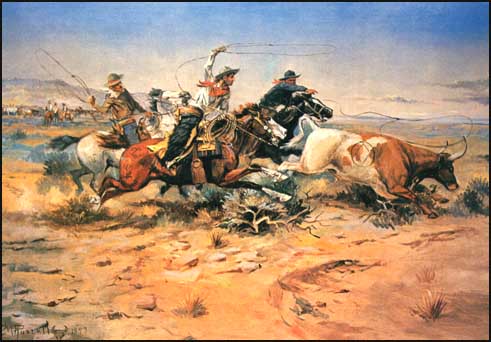
Dans l'Ouest américain, la tâche des cow-boys consistait à veiller sur le bétail dans des zones de pâturage non clôturées. Ils devaient l'empêcher de se disperser et le mener vers d'autres herbages.

Lorsque les éleveurs se mirent à confiner leurs bêtes dans des enclos ("fence in"), on eut moins besoin de cow-boys. Pour ces derniers, ce fut la fin de leur existence dans les vastes étendues et il est normal qu'il ne leur plaisait pas d'être privés de leur liberté de mouvement ("to be fenced in”).

Depuis les années 1920, les westerns célèbrent la rude existence des cow-boys. Ces films relatent souvent la lutte qui opposait les cow-boys et les autochtones (appelés “Indiens”), en recourant à des stéréotypes réducteurs. De nos jours encore, quand il est question des cow-boys et des Indiens, il faut comprendre “les bons et les méchants”.

Roy Rogers (1911-1988) fut un chanteur et acteur américain légendaire surnommé "le cow-boy chantant". En 1944, il sortit une chanson qui devint célèbre et fut reprise par d'autres chanteurs de cette époque : Don’t Fence Me In (Laisse-moi ma liberté).

http://www.youtube.com/watch?v=e3ebEEe8VEw

Les paroles expriment la volonté de ne pas être privé de sa liberté.


Le vidéoclip suivant présente une version humoristque de Don’t Fence Me In, chantée par Dean Martin et Mireille Mathieu en anglais et en français:

http://www.youtube.com/watch?v=tmh3v8TPyn4

Note linguistique

Le mot “fence” a des significations qui varient selon le contexte. Le substantif désigne une clôture, mais aussi un receleur. "Fencing" est un sport, l'escrime, mais également un matériau pour clôture. Un "fencer" est un escrimeur. "To fence with a sword or sabre" signifie tirer à l’épée ou au sabre. "To fence off" a généralement le sens de séparer un terrain des terres avoisinantes par une clôture. Une "sunken fence" (saut-de-loup), entoure un jardin ; son sommet se situe au même niveau que ce jardin et est bordé d'une tranchée. Appelé aussi "ha-ha" (http://fr.wikipedia.org/wiki/Ha-ha) (1), tant en français qu'en anglais, le saut-de-loup empêche le passage des moutons et des bovins, sans obstruer la vue. Le mot "ha-ha" est d'origine française (World Wide Words).

L'American Heritage® Dictionary of the English Language, Fourth Edition présente les définitions suivantes :

Fence:

Nom :
1. Dispositif servant d'enclos, de barrière ou de limite, généralement constitué de pieux reliés par des planches ou du fil de fer.
2. Escrime.
3. a. Personne qui reçoit et vend des biens volés.
b. Lieu où des biens volés sont déposés et vendus.

Verbe transitif :
1. Entourer d'une clôture.
2. Séparer ou fermer au moyen d'une clôture.
3. Vendre (des biens volés) à un receleur.

Verbe intransitif :
1. Pratiquer l'escrime.
2. Utiliser une tactique qui rappelle les attaques et les parades de l'escrime.
3. Eviter de donner une réponse directe ; éluder la question.
4. Se rendre coupable de recel.

Plusieurs expressions idiomatiques contiennent le mot "fence" ;

- To mend fences – rétablir de bonnes relations ; se réconcilier (après un désaccord)

- To sit on the fence – ménager la chèvre et le chou

De même, des proverbes contiennent ce mot :

- Good fences make good neighbors (proverbe du XVIIe siècle, mais rendu célèbre par le poème “Mending Wall” de Robert Frost) : une bonne clôture garantit de bonnes relations de voisinage.

- Do not protect yourself by a fence, but rather by your friends (proverbe polonais) : des amis vous protègent mieux qu'une clôture.

- The grass is always greener on the other side of the fence : l'herbe est toujours plus verte de l'autre côté de la clôture.

- Il ne faut pas qu'une clôture ait plus de valeur ou d'importance que ce qu'elle protège (proverbe hébreu).

(1) Ha Ha (1712) : élément de jardin conçu au XVIIIe siècle, qui consiste en une tranchée dont une face interne verticale est un mur de soutènement et l'autre face est en pente et gazonnée. Il donne au propriétaire une vue continue. Ce mot provient du mot français "ha-ha", qui désigne une tranchée située derrière une ouverture pratiquée dans un mur à la base d'une allée. Selon des étymologistes français, la syllabe "ha" est une exclamation de surprise – à moins qu'elle n'exprime la peur.

http://www.askoxford.com/worldofwords/wordfrom/garden/

mercredi 2 juin 2010

Money, money, money (français)

La version anglaise du présent billet de Jacquie Bridonneau a été publiée il y a quelques jours.

Que vous étiez né ou non lorsqu'Abba chantait cette chanson, vous avez probablement dansé sur son rythme.

Money, money, money
Must be funny
In the rich man's world
Money, money, money
Always sunny
In the rich man's world
Aha-ahaaa
All the things I could do
If I had a little money
It's a rich man's world”.

A propos d'argent, en Europe, on utilise l'euro et aux Etats-Unis le dollar : le nom de la monnaie varie d'un pays à l'autre. Aujourd'hui, nous examinerons l'euro et le dollar, et l'origine de la dénomination de ces monnaies.

L'euro est une monnaie très récente. Le 1er janvier 1999, elle il est devenue une monnaie virtuelle, avant de commencer à circuler en tant que monnaie officielle de 12 pays européens (Allemagne, France, Italie, Espagne, Portugal, Belgique, Luxembourg, Pays-Bas, Autriche, Grèce et Irlande). En conséquence, le schilling autrichien, le franc belge, le markka finlandais, le franc français, le mark allemand, la drachme grecque, la lire italienne, la livre irlandaise, le franc luxembourgeois, le florin néerlandais, l'escudo portugais et la peseta espagnole ont tous été remplacés par l'euro, avec plus ou moins de difficulté.

Comme un grand nombre de langues sont parlées dans ces pays, qui a décidé du nom de la monnaie commune ? Initialement, l'Institut monétaire européen, créé en 1994, utilisait l'abréviation ECU (European Currency Unit ou unité monétaire européenne) pour désigner la future monnaie. Il se fait que le mot “écu” désignait les pièces d'or ou d'argent qui commencèrent à être utilisées sous le règne de Louis IX, en 1266, de sorte qu'il s'agissait d'une appellation facile à retenir pour les Français, lorsque ceux-ci apprirent qu'ils devraient renoncer à leur cher franc français. Cependant, lors d'une réunion qui se tint à Madrid en 1995, il fallut décider non seulement de la date officielle de lancement de la nouvelle monnaie européenne, mais aussi de son nom. Les Allemands préconisèrent "Euromark", les Français "eurofranc" et les Anglais "Europound", et l'on se mit finalement d'accord sur la proposition néerlandaise : "Si nous utilisions les quatre premières lettres ?" C'est ainsi que l'euro fut officiellement baptisé.


Qu'en est-il du dollar ? Les Etats-Unis sont un pays relativement jeune, par comparaison avec l'Europe. La plupart des premiers colons européens partirent d'Angleterre, où la monnaie officielle était la livre. Pourquoi ne pas appeler la monnaie américaine "livre américaine" par exemple ?

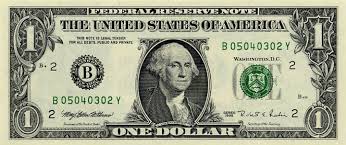
Le mot “dollar” est beaucoup plus ancien que la monnaie des Etats-Unis et provient du mot “thaler”, qui désignait des pièces de monnaie frappées à partir de 1519. Celles-ci étaient en argent extrait d'une mine située à Joachimsthal, ville de Bohême. Les pesos espagnols et les pièces portugaises de huit réals (les anglophones connaissent bien les “pieces of eight”, dont il était question dans les histoires de pirates) étaient à cette époque aussi appelés "dollars", car ils avaient un poids, un aspect et une valeur similaires. Ces deux pièces circulaient dans les colonies britanniques d'Amérique du Nord, en raison d'une pénurie de monnaie britannique. Les perles de wampum étaient aussi utilisées comme monnaie, en particulier dans la zone septentrionale, de même que le tabac ou les certificats de tabac conservé dans des entrepôts de Virginie. Des monnaies étrangères circulaient également. En 1792, les Etats-Unis, dont l'indépendance était récente, choisirent le dollar, divisé en 100 cents, comme monnaie officielle.


Le dollar est aujourd'hui le nom des monnaies utilisées dans de nombreux autres pays, tels que le Canada, le Zimbabwe, l'Australie, Hongkong, Singapore et la Nouvelle-Zélande.